

MEAN WELL
Proveedor
Proveedor
Proveedor
Proveedor
Constant voltage MEAN WELL LED strip power supplies for 12V and 24V tape: compact indoor units, IP67 encapsulated drivers for damp and outdoor locations, and dimmable models for 0-10V and PWM control.
Most LED strips (LED tape) are constant voltage: they are rated 12V or 24V DC and need a constant voltage (CV) power supply with exactly the same output voltage. A 24V strip on a 12V supply will be dim or won't light; a 12V strip on a 24V supply will overheat and fail.
If your strip is rated in milliamps (for example 700mA), it needs a constant current driver instead. See constant current vs constant voltage LED drivers.
Take the strip's power rating from its spec sheet (W/ft or W/m), multiply by the total length on one supply, then add headroom so the supply runs at about 80% of its rating (roughly 20–25% margin).
How to Size a Power Supply for LED Strips (full guide with examples) →
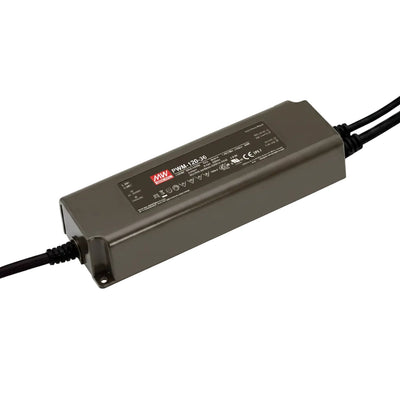
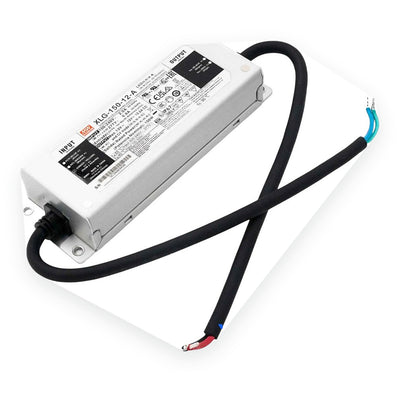
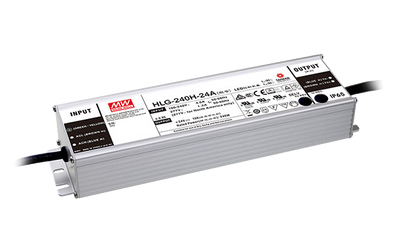
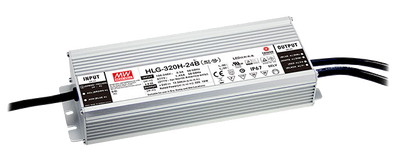
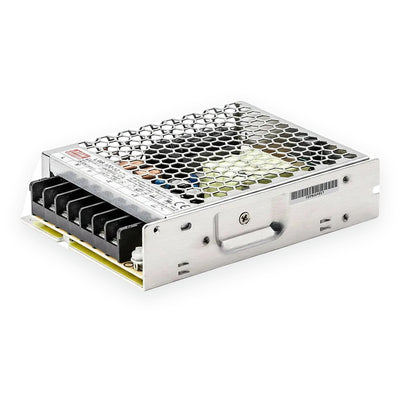
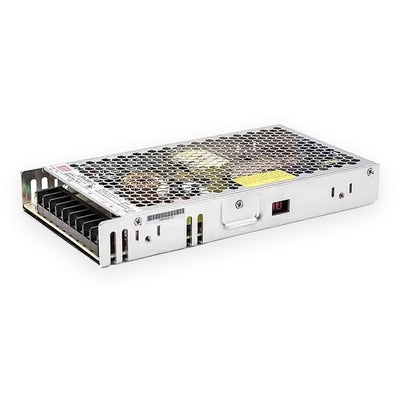

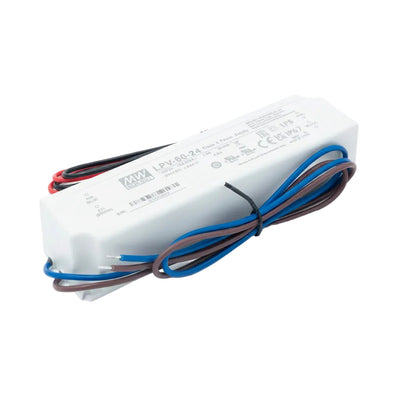
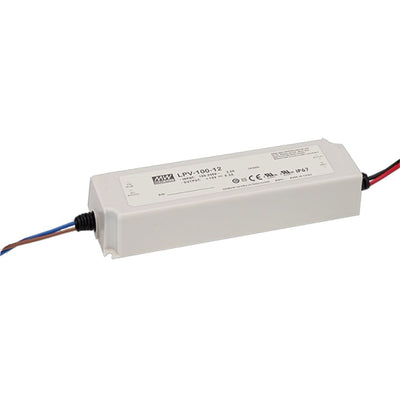
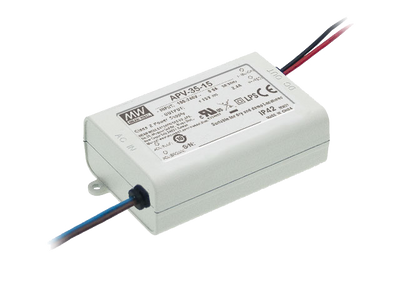
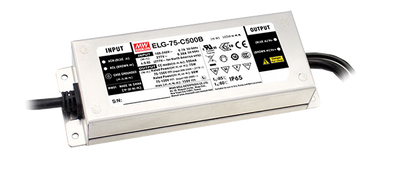
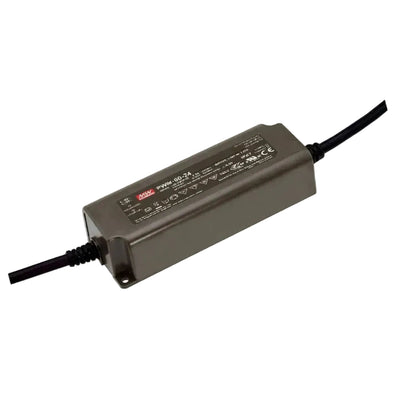
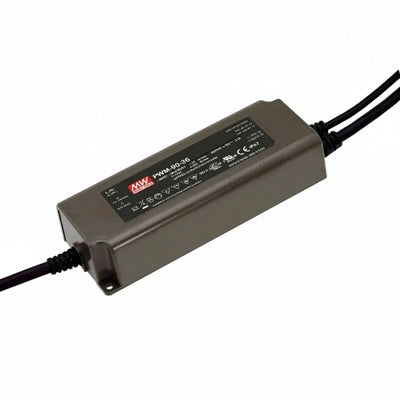
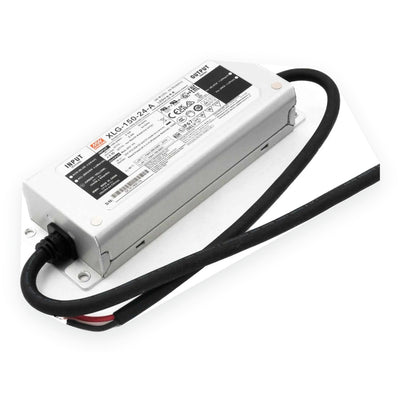
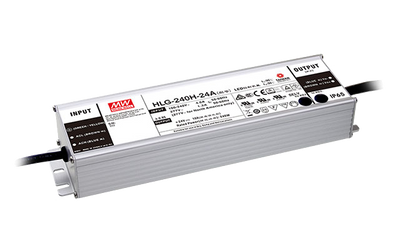
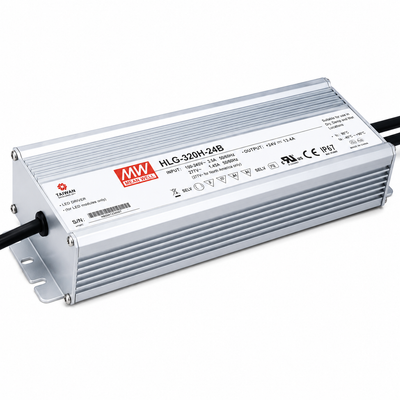
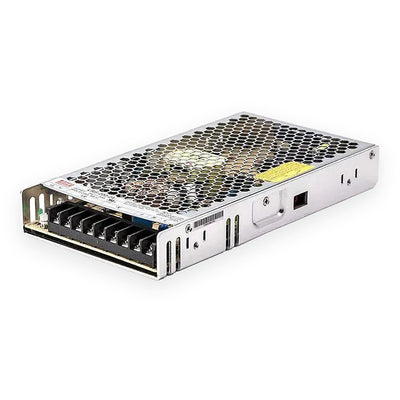
Wattage is only half the decision. Where the supply is mounted matters just as much: inside a cabinet, in a cove, or outdoors in landscape and facade lighting.
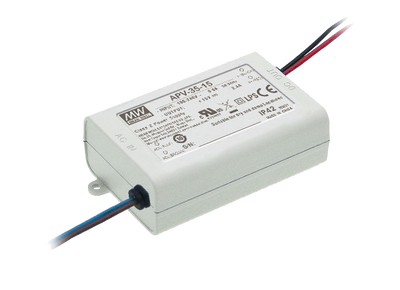
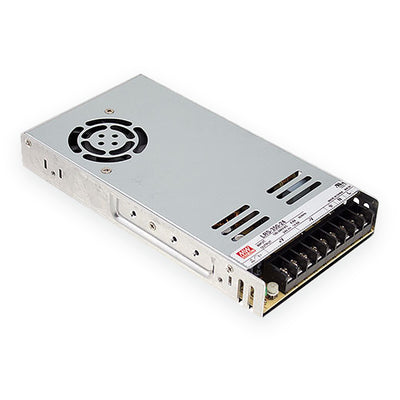
APV is a compact plastic-case unit rated IP42 (indoor / dry locations, not waterproof) and LRS a metal-case enclosed supply for use inside a fixture, cabinet or panel. Neither is waterproof, so keep them dry. On LRS-200 and LRS-350, set the AC input switch to match your line voltage.
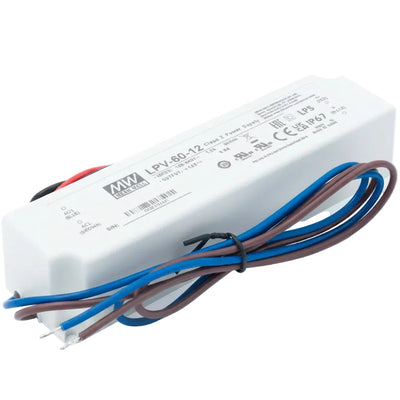
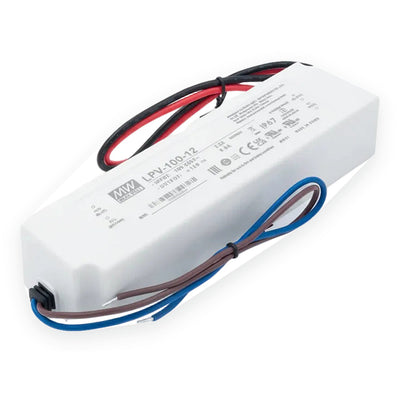
Fully encapsulated with IP67 protection, for damp locations, under-cabinet runs, signage and outdoor strips. LPV is the simple fixed-output choice.
Metal-housing drivers for outdoor and high-power runs. IP rating depends on the model and type, so check the product page and datasheet.
Dimming methods vary from strip to strip, so confirm with your strip and control manufacturer.
Long strip runs lose voltage along their length, which shows up as dimmer or color-shifted LEDs at the far end.
| Series | Power (models on this page) | IP rating | Dimming | Best for |
|---|---|---|---|---|
| APV | 36 W | IP42 (indoor / dry locations, not waterproof) | No | Compact, dry indoor |
| LPV | 20–102 W | IP67 | No | Small runs, damp locations |
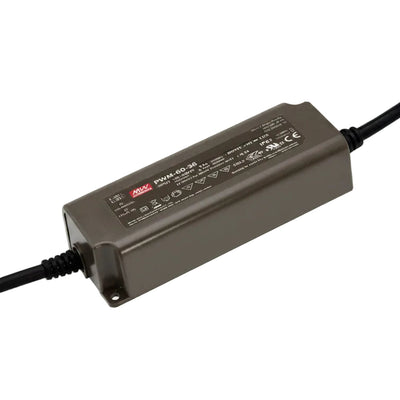
| PWM | 60–120 W | IP67 | 0-10V, PWM, resistance (DALI on DA2) | Dimmable strips |
| ELG | 75 W | IP65 | 0-10V, PWM, resistance (AB type) | Outdoor, dimmable |
| XLG | 150 W | IP67 | No (A type: output trim) | Outdoor, mid power |
| HLG | 192–320 W | IP65 | 1-10V, PWM, resistance (AB type) | Outdoor, high power |
| LRS | 102–350 W | Not waterproof (enclosed) | No | Indoor cabinets and panels |
Figures are for the models listed on this page. Always confirm full specs on the datasheet linked from each product page.
Multiply the strip's watts per foot (or meter) by the total length, then divide by 0.8 so the supply runs at about 80% load. For example, a 12V strip rated 2.2 W/ft over 16.4 ft (5 m) draws about 36W, so choose at least 45W, such as the LPV-60-12. See our guide How to Size a Power Supply for LED Strips.
No. The supply voltage must match the strip. A 12V strip on a 24V supply will overheat and fail; a 24V strip on a 12V supply will be dim or won't light.
Most LED strips are constant voltage (12V or 24V) and need a constant voltage power supply. Products rated in milliamps, such as many COB modules, need a constant current driver.
Look for an IP67 or IP65 rating: LPV, PWM and XLG models on this page are IP67, and the ELG and HLG models listed are IP65. APV is IP42 (indoor / dry locations, not waterproof) and LRS is not waterproof, so both should stay indoors and dry.
Use a dimmable constant voltage driver such as the PWM series or an HLG or ELG AB-type, and connect a compatible 0-10V, PWM signal or resistance controller to its dimming input. Check that your strip and controller support the same method.
For LED strips, an "LED driver" and an "LED power supply" usually mean the same thing: a unit that converts AC line power to a regulated DC voltage. Some people call it a transformer, but LED strips need a regulated DC output, not the AC output of a traditional low-voltage transformer.
Follow the strip manufacturer's maximum run length. For longer runs, feed the strip from both ends or split it into segments wired back to the supply, and consider 24V, which needs half the current of 12V for the same wattage.
Yes. Wire the strips in parallel back to the supply and keep the combined load, plus headroom, within the supply's rating.
Email your strip's voltage, W/ft and total length to sales@htdelectronics.com, or request a quote for project quantities.